Health Guide · Understand before you chase a fix
Belly Fat or Bloating? A Clear Next-Step Guide
Updated . Added a fill-in appointment worksheet that prints with the when-to-get-help checklist. Entries stay in your browser.
Your stomach feels bigger. Is that fat, bloating, or something else? First of all, a photo cannot settle that. Neither can one tape-measure reading. Here is what is worth checking before you buy a “belly-fat fix” or cut out half your food.
Start with the pattern. Not a diagnosis.
NoticeWhat changed, and when?
Measure, if usefulA waist reading gives context, not a diagnosis.
AskSymptoms may need care before tracking.
These are not the same thing.
A bigger-looking stomach does not tell the whole story.
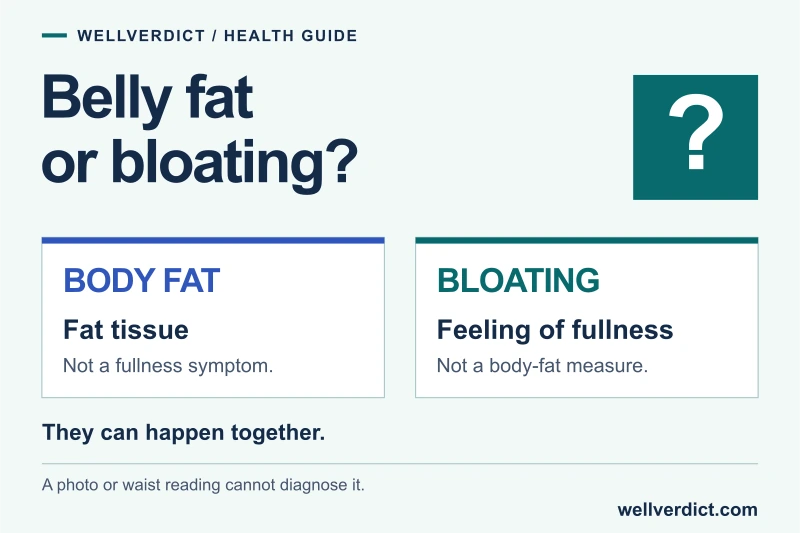
Fat and bloating are different things.
Belly fat
Fat stored around the abdomen. Waist size helps assess health risk, but does not directly measure fat.
Bloating
A full or swollen feeling. Your abdomen may look larger, but it does not always.
Bloating is not always extra gas. Constipation, difficulty digesting some carbohydrates, and how the gut senses or moves its contents can contribute. The pattern helps guide an assessment; it does not identify the cause by itself.
A changing waist is not the whole story.
Age can change the picture.
Aging affects muscle. Menopause can change where fat is stored, often toward the abdomen.
Do not blame it all on age.
New or persistent bloating still needs attention. A menopause explanation is not a diagnosis.
Symptoms come before the planner.
Sudden sharp or severe constant belly pain; repeated vomiting; blood in vomit; or black, tarry stools. A swollen, painful abdomen with inability to pass stool or gas—especially with vomiting—also needs urgent assessment.
Persistent swelling, a sudden symptom change, or bloating with unexplained weight loss, diarrhea or constipation. New bloating with feeling full quickly, pelvic pain or urinary changes also deserves assessment. Bloating that keeps returning or disrupts daily life is worth discussing even without another symptom.
Unusual vaginal bleeding, especially after menopause, needs a doctor right away. These symptoms can have many causes. This is not a complete list; do not wait for a tracking period if you feel unwell.
Only track what will be useful.
You do not need to measure your body to ask for help.
Know the limits of your tools.
Tape measure
Tracks waist size, not your body-fat percentage.
Mirror
Cannot explain why your abdomen looks different.
Symptom log
Gives a clinician context. It does not diagnose an intolerance.
If you track your waist, be consistent.
- Stand.Find the top of your hipbones.
- Place the tape.Wrap it just above them.
- Keep it level.Snug, not pressing into skin.
- Breathe out.Read after a normal exhale.
Use the same technique and similar conditions each time. Avoid measuring immediately after a meal or during bloating. A change is not automatically a change in fat.
Take a useful note. Not a diagnosis.
Type here, or print a blank sheet to write on. You do not need a completed log, waist measurements or photographs to ask for care.
Your entries stay on this page. They are not sent to WellVerdict or saved by the site. Print before leaving if you want to keep them.
Do not wait to finish this sheet if you feel unwell. Sudden severe belly pain, repeated vomiting or blood in vomit need urgent medical assessment. See the full when-to-get-help checklist. Do not stop prescribed medicine on your own.
The right question changes the plan.
A fat-loss goal and a digestive symptom need different thinking.
Two questions. Two different next steps.
Want to reduce excess fat?
Work on your overall eating and activity pattern. Include strength work. Ab exercises are not a reliable spot-fat treatment.
Want help with bloating?
Try slower eating and notice whether fizzy drinks affect symptoms. If increasing fiber for constipation, add it gradually. Discuss recurring symptoms before removing whole food groups.
Thinking about going gluten-free? Ask whether celiac testing is appropriate first: removing gluten before testing can affect the results. A targeted diet should match an assessed problem; a registered dietitian can help you plan it.
Replace the shortcut with a useful question.
Take three things to the appointment.
- When did it start?Write the start date, how often it happens, and whether it is getting worse.
- What comes with it?Note pain, bowel or urinary changes, feeling full quickly, or unusual bleeding.
- What else changed?Bring a medicine and supplement list, including anything started or increased before symptoms began. Do not stop prescribed medicine on your own.
A note can be simple: “I feel full sooner than usual. This started on [date] and happens [how often].” Notes support a conversation; they do not establish the cause.
The useful goal is understanding the pattern, not proving that your body is wrong. This is general information for adults, not individual medical advice.
Evidence and useful reading
- MedlinePlus: abdominal pain and when to seek medical help
- NIDDK: testing before changing to a gluten-free diet
- NIDDK: adding fiber gradually for constipation
- NIDDK: waist size, health risk and measurement limits
- NIDDK: bloating, distention and when to get assessed
- NHLBI: measuring your waist
- ADA, 2026: consistent waist-measurement conditions
- NIDDK: eating habits, symptom diaries and individualized diets
- NIDDK: serious abdominal symptoms
- CDC: aerobic activity plus muscle strengthening
- Human Movement, 2022: 13-study review of localized exercise and fat loss
- NCCIH: evidence and risks of detoxes and cleanses
- The Menopause Society: midlife body changes
- CDC: persistent bloating and other symptoms that need assessment
Use the optional notes to support a conversation with your clinician. Sources checked October 3, 2026.