Health Guide · Food for the week you actually have
Your January 2027 Meal Plan Needs a Backup
Updated . Added a fill-in shopping sheet and a cooking-for-one-or-two plan, with storage guidance.
Meal prep sounds good until Sunday disappears. Then what? You do not need seven identical boxes to plan your food. You need an ordinary-day meal, a freezer option and something you can assemble when cooking is not happening. Start there.
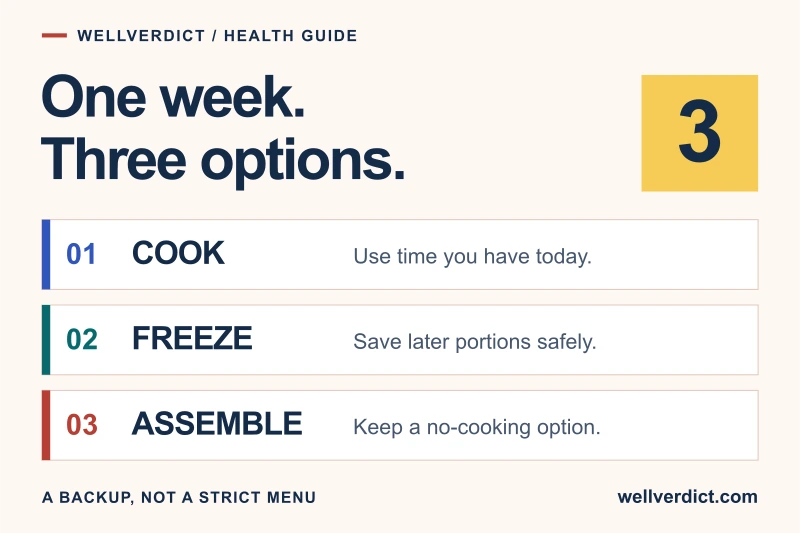
One week. Three options.
CookUse time you have today.
FreezeSave later-week portions safely.
AssembleKeep an option with no cooking.
Start with the time you actually have.
The backup is part of the plan, not a failure.
Three plans. Same week.
Time to cook?
Prepare dinner plus a usable leftover portion.
Short evening?
Use a safely stored meal from your freezer.
No cooking today?
Combine ready-to-eat ingredients. It still counts as a plan.
Choose by the time you actually have, not the time you hoped to have.
Feed yourself. Support your strength.
A smaller appetite is not a reason to forget nourishment.
Keep muscle in the plan, not just weight.
Include protein foods.
Try dairy yogurt or fortified soy yogurt, eggs, fish, tofu, beans or lentils in meals you enjoy.
Keep strength work.
Protein is not a replacement for using your muscles. Plan suitable strength activity on at least two days.
Keep enough variety.
Eat a range of foods. Do not turn a simple backup into a very restrictive diet.
Food and activity needs are individual. Kidney disease, allergies, poor appetite or unintended weight loss call for tailored advice, not a universal protein target.
Mix the pieces. Keep the variety.
Protein food
- Beans or lentils
- Tofu
- Eggs, fish or chicken
Produce
- Frozen vegetables
- Bagged salad
- Fruit you enjoy
Grain or starchy food
- Oats or brown rice
- Whole-grain bread
- Potatoes
Meal-building examples, not equal calorie portions or a complete diet. Fit amounts and other foods, including dairy or suitable alternatives, to your needs.
One basket does not mean one meal.
Six ingredients: chickpeas, brown rice, whole-grain bread, salad greens, frozen vegetables and plain yogurt.
| Evening | Make it work |
|---|---|
| 1 · Warm bowl | Ready-to-eat canned chickpeas + brown rice + frozen vegetables. Cook or heat the rice and vegetables as their labels direct. Add herbs, spices or a dressing you enjoy. |
| 2 · Quick sandwich | Mash ready-to-eat chickpeas with plain yogurt and a little lemon if available. Serve on bread with washed greens. Use the fresh greens early, while they are still good. |
| 3 · Salad plate | Combine ready-to-eat chickpeas, washed greens and yogurt dressing; serve bread alongside. If the greens are no longer usable, choose vegetables you can safely cook instead. |
Choose package sizes and portions for the people you are feeding. Refrigerate opened foods as their labels direct. These are dinner ideas, not a complete daily menu.
Too tired to cook? Choose one combination.
| What you have | What to put together |
|---|---|
| A microwave | Ready-to-eat lentils + microwave brown rice + frozen vegetables. Heat following labels. |
| A toaster | Whole-grain toast + ready-to-eat beans + washed salad greens. |
| No cooking | Plain dairy yogurt or fortified soy yogurt + ready-to-eat oats + fruit. Check labels for preparation, protein, calcium and vitamin D; plant-based alternatives vary. |
Choose amounts that suit you. Use label storage instructions and safe handling even for “no-cook” meals. Ready-to-eat does not mean shelf-stable.
Give every grocery item a job.
Check your kitchen first. Write an amount and a meal beside each item you need—not just a wish list of ingredients.
Your list is not sent to WellVerdict or saved by the site. Print it before leaving, or print a blank copy.
Compare pack sizes using your own store pricesA bigger pack is useful only if you can use or safely store it. Follow package storage directions. For cooked leftovers, refrigerate promptly and use within 3–4 days or freeze. See the storage plan.
Cooking for one or two? Plan the extra portion.
“Family size” is not automatically better value. Match the amount to the meals you will actually eat.
- TonightMake the chickpea-and-rice bowl in the amount you need. Cook frozen vegetables as directed.
- Next mealUse washed greens and refrigerated, ready-to-eat chickpeas for a sandwich. Follow the opened can’s storage directions.
- Not eating it soon?Freeze extra cooked portions promptly in meal-sized containers. Label them, so “backup dinner” is easy to find.
Buy smaller packs of fresh greens if a large bag usually goes unused. Frozen vegetables and bread you can freeze give you more flexibility. Oklahoma State University Extension: cooking for one or two.
Keep cooked leftovers refrigerated at 40°F or below for 3–4 days, or freeze; reheat to 165°F. Refrigerate within two hours, or one hour above 90°F. USDA safety guidance.
Give the rest of the week a safe plan.
The fridge and freezer have different jobs.
Your fridge is not a seven-day meal plan.
Example: cook Sunday, January 3, 2027. Refrigerate early-week portions promptly. Freeze later-week portions the same day.
Most cooked leftovers: 3–4 days refrigerated. Freezing does not make food safe if it was already stored unsafely.
The numbers that actually matter.
Get it cold.
Refrigerate perishable leftovers within this time. Within 1 hour above 90°F.
Or colder.
Keep the fridge at 40°F or below. Use shallow containers for cooling.
Reheat leftovers.
Check with a food thermometer, not just touch.
Do not wait for a large pot to cool on the counter. Divide leftovers into shallow containers and refrigerate promptly. Keep your freezer at 0°F or below. Thaw in the refrigerator, not on the counter, or reheat frozen leftovers directly to a safe temperature. For microwave leftovers, cover and rotate as appropriate, and check 165°F in several places because cold spots can remain. Follow purchased-food package directions.
Shop your kitchen before the store.
What fresh food is already here?
What can rescue a busy evening?
What can become an assembly meal?
Write the missing items on your grocery list. Buy for actual meals, not an imagined perfect week.
Meal prep helps planning. It does not guarantee fat loss.
| Check | Useful question |
|---|---|
| Overall intake | Do portions, snacks and drinks fit my needs? |
| Variety | Am I removing foods unnecessarily? |
| The hard day | Is my backup something I will actually use? |
Fat loss generally needs an energy deficit over time. Food amounts are individual. Do not treat these combinations as calorie-matched meals.
Evidence and useful reading
- USDA MyPlate: dairy foods and fortified soy alternatives
- USDA MyPlate: planning meals, using existing food and keeping backups
- USDA FSIS: leftovers, storage, thawing and reheating
- CDC: varied foods, adequate nutrition and individual energy needs
- CDC: energy balance and physical activity
- NIA: protein foods, variety and practical meal planning
- CDC: weekly muscle-strengthening guidance
Adapt the food examples and planning sheets to your household and dietary needs. Sources checked October 3, 2026.